What Does a Construction Site Need for Sanitation?
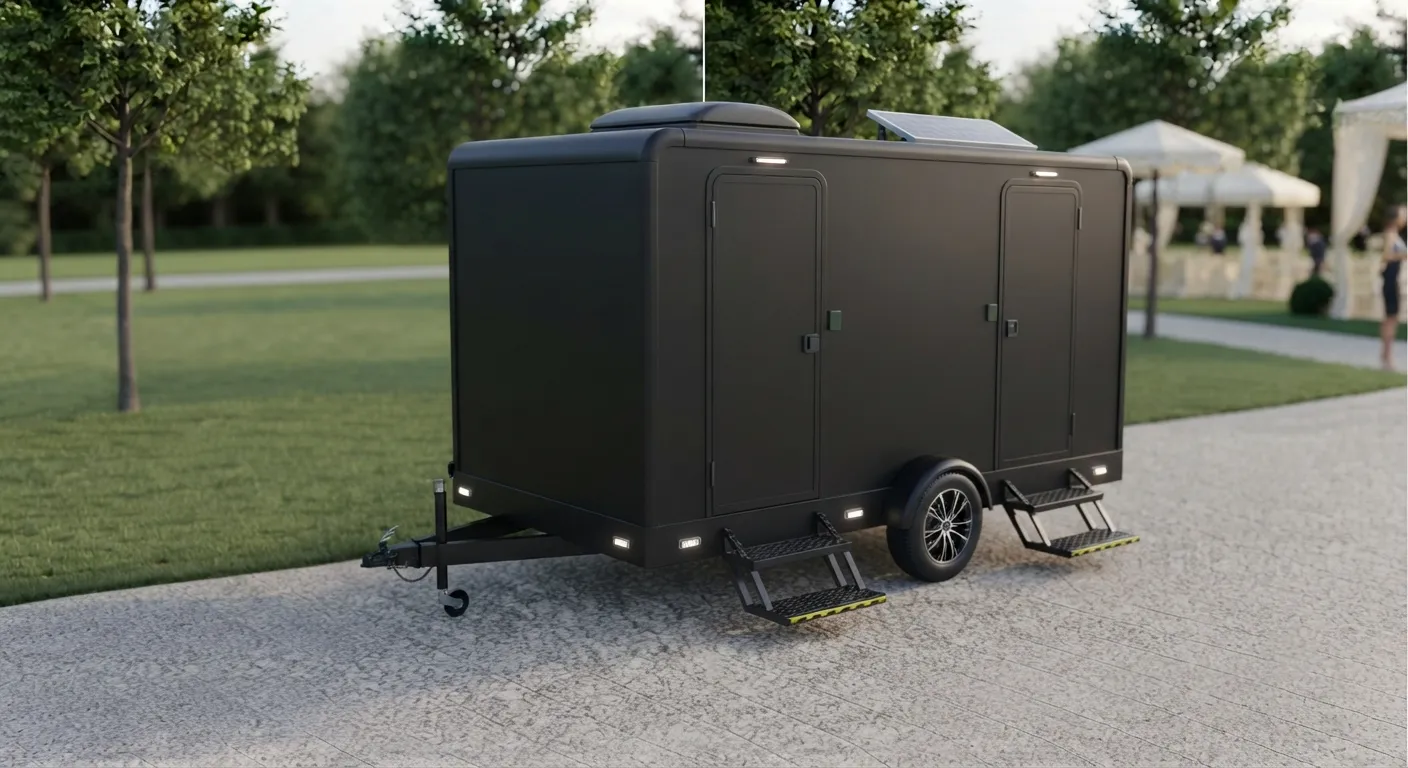
Every jobsite needs toilets, water and a place to wash up, and OSHA does not leave the ratio to guesswork. Under OSHA 1926.51(c), crews of 20 workers or fewer need one toilet facility. Once headcount climbs past 20, you add a toilet seat and a urinal for every 40 workers, and at 200 workers or more that ratio eases to one seat and one urinal per 50. OSHA 1926.51(a)(1) also requires an adequate supply of potable water on site, which is why most general contractors pair standard porta potty rental with a water station rather than treat the two as separate line items. If your crew handles paint, coatings, herbicides or insecticides, OSHA 1926.51(f)(1) kicks in and washing facilities become mandatory, not optional. We size the count using our porta potty calculator guide, then confirm delivery windows so units are staged before your crew shows up Monday morning. For general industry sites that fall outside construction rules, the ratio comes from OSHA 1910.141(c)(1)(i) instead, so tell us which standard applies before we quote. Crews searching cal osha portable toilet requirements construction should know California enforces its own state plan, but the federal 1926.51(c) ratios above are the baseline most contractors reference nationwide, whether the crew is running a construction portable toilet rental near Texas or a construction portable toilet rental near California.
How Much Does Portable Toilet Rental for Construction Sites Cost?
A standard unit runs $100 to $150 a day, $130 to $500 for a full week, and $125 to $325 for a month, depending on service frequency and how long the job runs.
| unit | day | week | month |
|---|---|---|---|
| standard | $100 - $150 | $130 - $500 | $125 - $325 |
| ADA accessible | $200 - $400 | $200 - $400 | - |
| deluxe flushable | $85 - $1,200 | $150 - $290 | - |
Delivery fees run separately, from $100 to $150 for a short job and $120 to $420 if the unit sits on site for a month. Multi-month builds usually land the best per-day rate once you're past the setup cost, which our monthly porta potty rental page breaks down further. If you're comparing day rates against a longer commitment, our porta potty rental per day guide and full cost breakdown walk through both. ADA units cost more because they're built to a different spec: a 60 inch turning circle under ADA 304.3.1 and a 32 inch clear door opening under ADA 404.2.3 take more material and a bigger footprint than a standard 44 by 48 inch unit.
Do Construction Sites Need ADA-Compliant Toilets?
Yes, once you cluster multiple units. ADA Standards 213.2 requires at least 5 percent of clustered single-user toilets be accessible, and never fewer than one unit, regardless of how small the cluster is. That means a Bolingbrook site running six or eight standard porta potty rental units needs at least one ADA accessible porta potty in the lineup, not as an afterthought once an inspector asks. The accessible unit also needs a stable, slip-resistant surface under ADA 302.1, a 36 inch clear route per ADA 403.5.1, and operable door hardware that needs no tight grasping or pinching under ADA 309.4. We stage these details before delivery so your site passes walkthrough the first time. Full ADA layout rules, including forward reach limits under ADA 308.2.1, are covered in our ADA restroom requirements guide and our broader placement guide if you're mapping out a multi-unit layout across a large lot.
What Else Does a Bolingbrook Construction Site Need Besides Toilets?
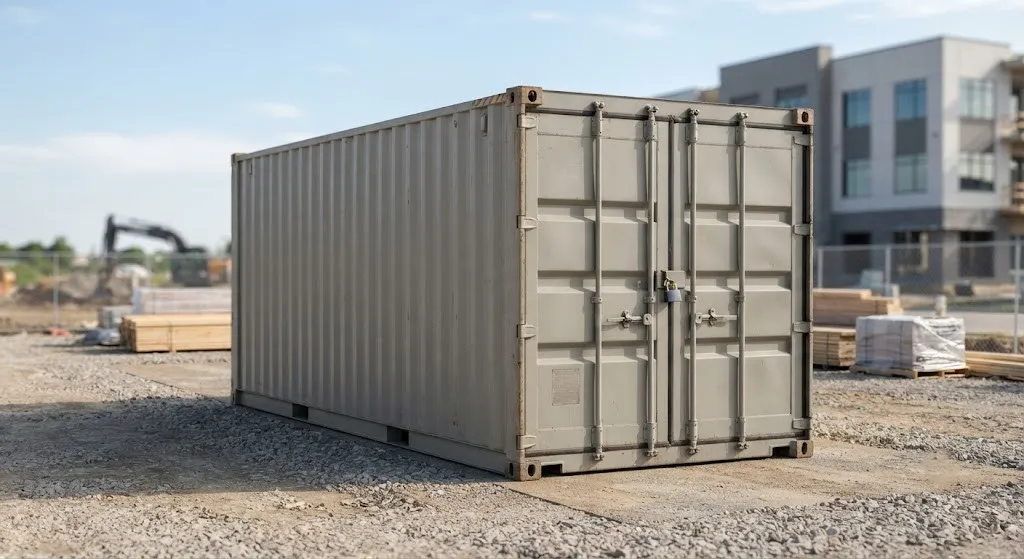
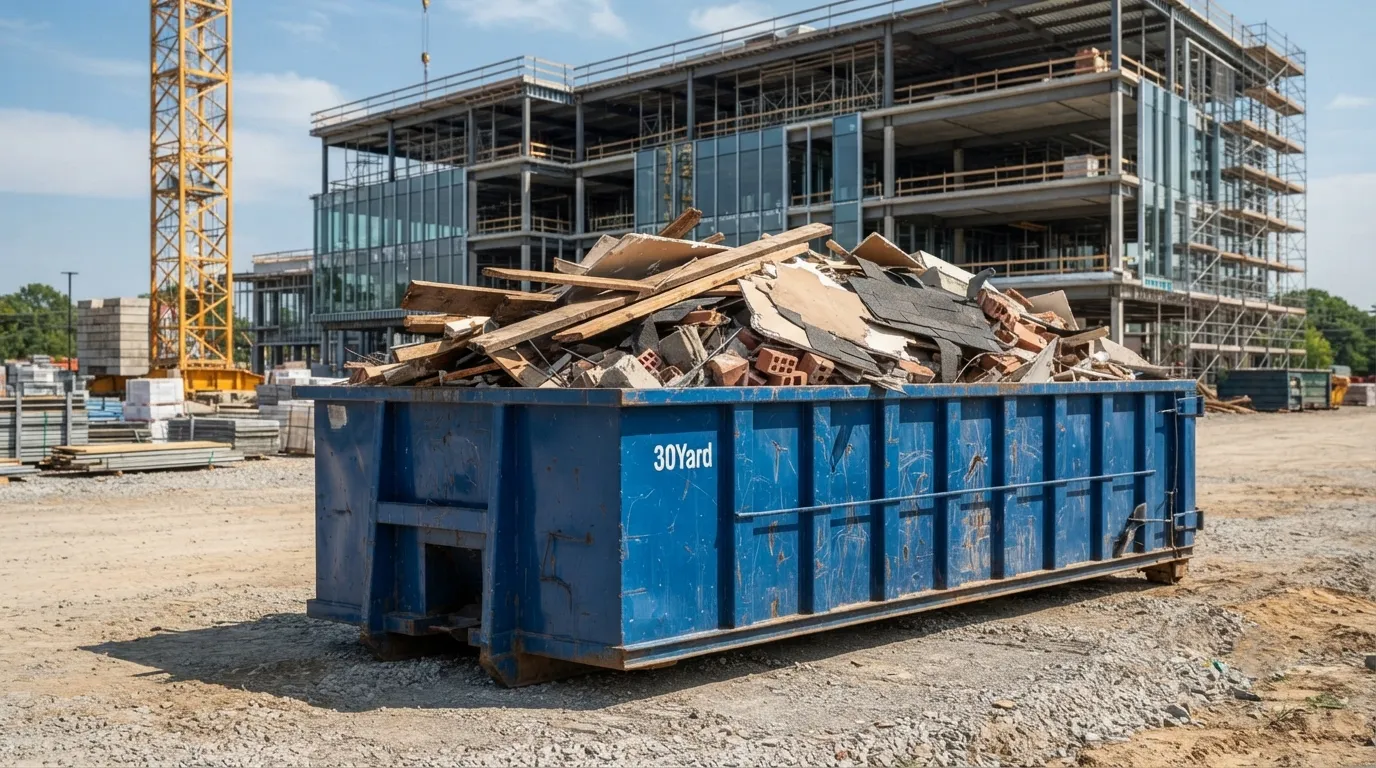
Toilets are one piece. Most Bolingbrook builds also need a roll-off dumpster rental for debris, since OSHA 1926.25 requires scrap and debris cleared from work areas, and OSHA 1926.252 covers how waste gets disposed of, including chutes and enclosures on multi-story jobs. A 10 yard dumpster rental runs $51 to $112 a day or $426 to $778 for the week, depending on volume; heavier tear-outs usually call for a 20 yard dumpster rental or larger. Check what cannot go in a dumpster and dumpster weight limits before loading, since overage fees stack up fast. Roll-off trucks need about 60 feet of straight clearance behind the drop point, so tell us if your Bolingbrook lot has tight access before we schedule delivery. Fenced perimeters matter too: barricades on active sites must conform to ANSI D6.1 under OSHA 1926.202, and a temporary fence rental at $30 to $75 a day keeps the public out and keeps your insurer happy. If your crew works after dark, pair fencing with a light tower rental to satisfy the illumination levels in OSHA 1926.56(a). Larger builds also lean on storage container rental for tools and a temporary power pole for job-site power, since OSHA 1926.404(b)(1)(ii) requires GFCI protection on construction circuits.
Frequently asked questions
How many porta potties does a 20-person crew need?
One toilet facility covers a crew of 20 or fewer under OSHA 1926.51(c). Past 20 workers, you add a toilet seat and urinal per 40 additional workers. Our how many porta potties do I need guide walks through headcount math for bigger sites.
Do handwashing stations satisfy OSHA on a paint crew?
Yes, if the crew applies paints, coatings, herbicides or insecticides, OSHA 1926.51(f)(1) requires washing facilities. A handwashing station rental with soap and towels, per 29 CFR 1910.141(d)(2), meets that requirement; hand sanitizer alone does not.
Can I get emergency porta potty delivery in Bolingbrook?
Yes. We run emergency porta potty rental for sites that lose a unit mid-job or add crew fast. Same-week delivery is typical; call ahead if your Bolingbrook site is inside a tight loading zone.
What size dumpster fits a home renovation job?
Most renovation tear-outs fit a 10 or 20 yard dumpster. See dumpster sizes and dimensions or start with our home renovation porta potty page if you're bundling toilets with debris removal.
Do I need a permit for a dumpster or fence in Bolingbrook?
Placement in the public right of way needs confirming with the city; we have not verified a specific Bolingbrook ordinance. Check dumpster permit requirements and porta potty permit requirements before locking in a curb placement.
Next step
Get a delivery date
Tell us the address, the dates and the headcount. We size the order and confirm the route.